Introduction
When my cousin’s daughter was denied admission at a nearby school despite living well within the required distance, she had no idea the Right to Education Act India actually protected her. Most parents don’t, honestly, until they run into a problem. This post breaks down what the Right to Education Act India actually guarantees, where its limits are, and what you can do if a school isn’t playing fair.
What Is the Right to Education Act?
In short: the Right to Education Act India, passed in 2009, guarantees free and compulsory education to every child aged 6 to 14 years as a fundamental right under Article 21A of the Constitution.
It’s not just a policy — it’s backed by constitutional force, which means it’s enforceable in courts if violated.
Who Is Covered Under RTE?
The Right to Education Act India applies to children between 6 and 14 years, covering roughly classes 1 through 8. It doesn’t currently extend to pre-primary education or secondary school (classes 9-12), which is honestly a gap a lot of education activists have pushed to fix over the years.
- Government schools must provide free education to all children in this age group
- Private unaided schools must reserve at least 25% of seats for economically weaker sections (EWS) and disadvantaged groups
- No child can be held back, expelled, or required to pass a board exam till completion of elementary education
The 25% Reservation Rule
This is one of the more talked-about provisions of the Right to Education Act India, and also one of the most misunderstood.
Private schools receiving no government aid still have to reserve 25% of entry-level seats (usually nursery or Class 1, depending on the state) for children from economically weaker and disadvantaged backgrounds. The government reimburses schools for this, though the reimbursement amount and process vary significantly by state — and delays in reimbursement have been a genuine sore point for many private schools.
No-Detention Policy: What Changed
Originally, the RTE Act included a strict no-detention policy up to Class 8. This got modified in 2019 — states now have the option to allow detention in Classes 5 and 8 if a child fails a re-examination, though this varies by state implementation.
I’ve noticed a lot of confusion around this because policy differs from state to state now, so it’s worth checking your specific state’s current rules rather than assuming a blanket rule applies.
What Schools Cannot Do
Quick answer: under the Right to Education Act India, schools cannot charge capitation fees, conduct screening tests for admission, expel a child for non-payment of fees, or subject children to corporal punishment.
Some specific prohibitions worth knowing:
- No capitation fees or donations for admission
- No interview or screening test for the child or parents at entry level
- No physical or mental harassment of students
- No denial of admission due to lack of age proof documents alone — schools must facilitate alternate verification
How to File a Complaint Under RTE
If a school violates any of these provisions, parents have real recourse:
- Approach the school management first with a written complaint
- Escalate to the District Education Officer if unresolved
- File a complaint with the State Commission for Protection of Child Rights (SCPCR)
- As a last resort, approach the courts — RTE violations are constitutionally enforceable
Picture a parent whose child was denied a seat under the EWS quota despite meeting all criteria. A written complaint to the District Education Officer, backed by documentary proof of income and residence, got the admission processed within a few weeks.
Documents Needed for EWS Admission
- Income certificate (usually below ₹1-2.5 lakh annually, threshold varies by state)
- Residence proof within the neighbourhood/catchment area
- Caste certificate, if applicable, for reserved category claims
- Birth certificate or age proof
[link to related guide on school admission rights in India here]
Limitations of the RTE Act
It’s not perfect, and I think it’s worth being honest about that. Implementation varies wildly by state, reimbursement delays discourage some private schools from full compliance, and the Act doesn’t cover pre-primary or secondary education. Real change often depends as much on parental awareness and persistence as on the law itself.
FAQs
Q1: What age group does the Right to Education Act cover? Children aged 6 to 14 years, covering elementary education from Class 1 to Class 8.
Q2: Can private schools charge for RTE quota seats? No, education under the 25% EWS quota must be free, with the government reimbursing the school.
Q3: Can a school expel a child for not paying fees under RTE? No, expulsion for non-payment of fees is prohibited under the elementary education age group covered by RTE.
Q4: Does RTE cover higher secondary education? No, currently it only covers Classes 1-8, not pre-primary or classes 9-12.
Q5: What can I do if my child is denied EWS admission unfairly? File a written complaint with the school first, then escalate to the District Education Officer or State Commission for Protection of Child Rights.
Conclusion
The Right to Education Act India genuinely changed the landscape for millions of children, but like most laws, it only works when people know how to use it. If you’re a parent navigating admissions or facing pushback from a school, don’t assume there’s nothing you can do — document everything, know the specific provisions that apply, and escalate through proper channels if needed. Awareness really is half the battle here.
Suggested Alt Text for Images:
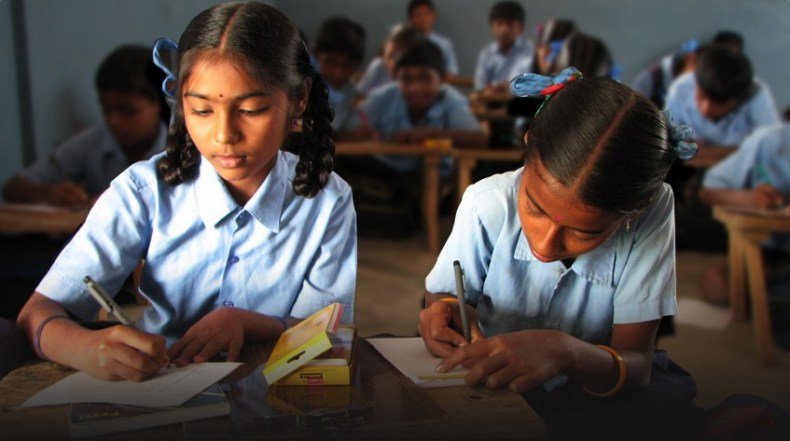
- “Children studying in an Indian classroom under RTE Act”
- “Parent submitting school admission documents”
- “RTE Act 25% reservation infographic for private schools”